The Maison Mieux-Être of the Grand Hôpital de Charleroi stands out as a pioneering space dedicated to supporting oncology patients. To discover the behind-the-scenes of this project, we met with Claudia Gaton, GHDC project manager and coordinator of the GHDC Fund. A former leading figure of Business For Charleroi, she underwent a human transformation five years ago to steer the construction of this space. Between professional rigour and personal commitment, she reveals the mission and philosophy of this unique place.
Key markers of the Maison Mieux-Être | Key Figures & Details |
|---|---|
Initial launch | 2016 (Notre-Dame site, Charleroi centre) |
New building | Inaugurated on 14 April 2026 on the 'Les Viviers' site in Gilly |
Economic model | Open and free access; workshops at a nominal cost (€2 to €4) |
Volunteer team | 57 volunteers engaged on a daily basis |
1. Vision
Telemis, Marketing Coordinator at Telemis: Could you retrace the origin of the Maison Mieux-Être and the genesis of this avant-garde project in Charleroi for us?
Claudia : “Everything started around 2015. The Director General of the Grand Hôpital de Charleroi visited a Nordic country, Denmark, where he discovered the innovative concept of 'resourcing houses' (maisons de ressourcement). Seduced by this comprehensive approach to care, he returned proposing the establishment of a similar initiative within the GHdC. At that time, the hospital had a building to renovate located right next to our Notre-Dame site, near the city centre of Charleroi and the Ville 2 complex.
We embarked on what was then almost a blank page. In 2016, we opened the very first Maison Mieux-Être. We were truly pioneers in Belgium. Although this concept was also inspired by the Maggie's Centres which are extremely well-developed in the United Kingdom, there were very few equivalent initiatives here at the time. Today, there are about a dozen such structures in Wallonia, as many in Flanders, and several in Brussels.”
Telemis: Why was it decided to relocate the initial structure to the new 'Les Viviers' hospital site in Gilly?
Claudia : “About five years ago, the GHdC undertook a vast restructuring aimed at consolidating its five historical sites (Notre-Dame, Sainte-Thérèse, IMTR, Saint-Joseph) into a single, ultra-modern hospital in Gilly. It appeared obvious that the Maison Mieux-Être should follow this dynamic and settle in the heart of the new site's park.
The immediate proximity to the hospital is crucial: the majority of patients visit our house just before or just after an oncology consultation. Furthermore, loved ones and caregivers can easily cross our doors. We needed to prevent patients weakened by treatments from having to multiply journeys, take another bus, or take their vehicle again. Being located in the Les Viviers park offers a haven of calm while remaining a stone's throw from the medical care pathways.”
2. The Pillars of Well-being: Caring for the Human beyond the Disease
Telemis: If you had to summarise the essential mission of the resourcing houses in one sentence, what would it be?
Claudia : “The fundamental objective is to offer moments of respite, a real breath of fresh air, both to people facing the disease and their caregivers, by removing them from a heavy and sometimes anxiety-inducing hospital environment.
The oncology pathway often imposes many hours of waiting in treatment rooms, a constant confrontation with suffering and the gaze of other patients. The Maison Mieux-Être allows for a step aside, to step out of this overwhelming context to rediscover a space for life, speech, and kindness.”
Telemis: What are the main support pillars offered within the house?
Claudia : “We structure our activities around integrative medicine, combining care of the body and support for the mind:
- Adapted physical activity: Numerous scientific studies show today that regular physical practice can reduce the risk of recurrence by up to 35% for certain cancers, such as breast cancer. It is a major therapeutic lever.
- Psychological and mental support: Sophrology and relaxation sessions help better tolerate treatments. When a patient is psychologically supported, they find the strength to see their therapy through to the end without giving up.
- Creative and manual activities: Painting classes, macramé, papercraft, origami, knitting, sewing, or floral art. In addition to mental escape, these workshops have a very concrete functional role. Chemotherapy often generates peripheral neuropathies, causing tingling in the fingertips. Working on fine dexterity helps to fight these symptoms.
- Nutrition and aesthetic care: Rediscovering the pleasure of eating and taking care of one's skin or image altered by treatments.”
Telemis: Is access to these activities chargeable for users?
Claudia : “Access to the house is totally free. The person can come and spend time, drink a glass of water, or chat whenever they wish during our opening hours. For supervised workshops, we ask for a symbolic participation of 2 euros per activity, or 4 euros for creative workshops (such as floral art or painting) where users leave with their creation. These amounts obviously do not cover the real costs of materials or operation, but they provide a value of engagement while remaining accessible to all.”
3. Architecture designed for humanity and serenity
Telemis: How did the architectural design of this new house take place, and what flaws of the old building did you have to correct?
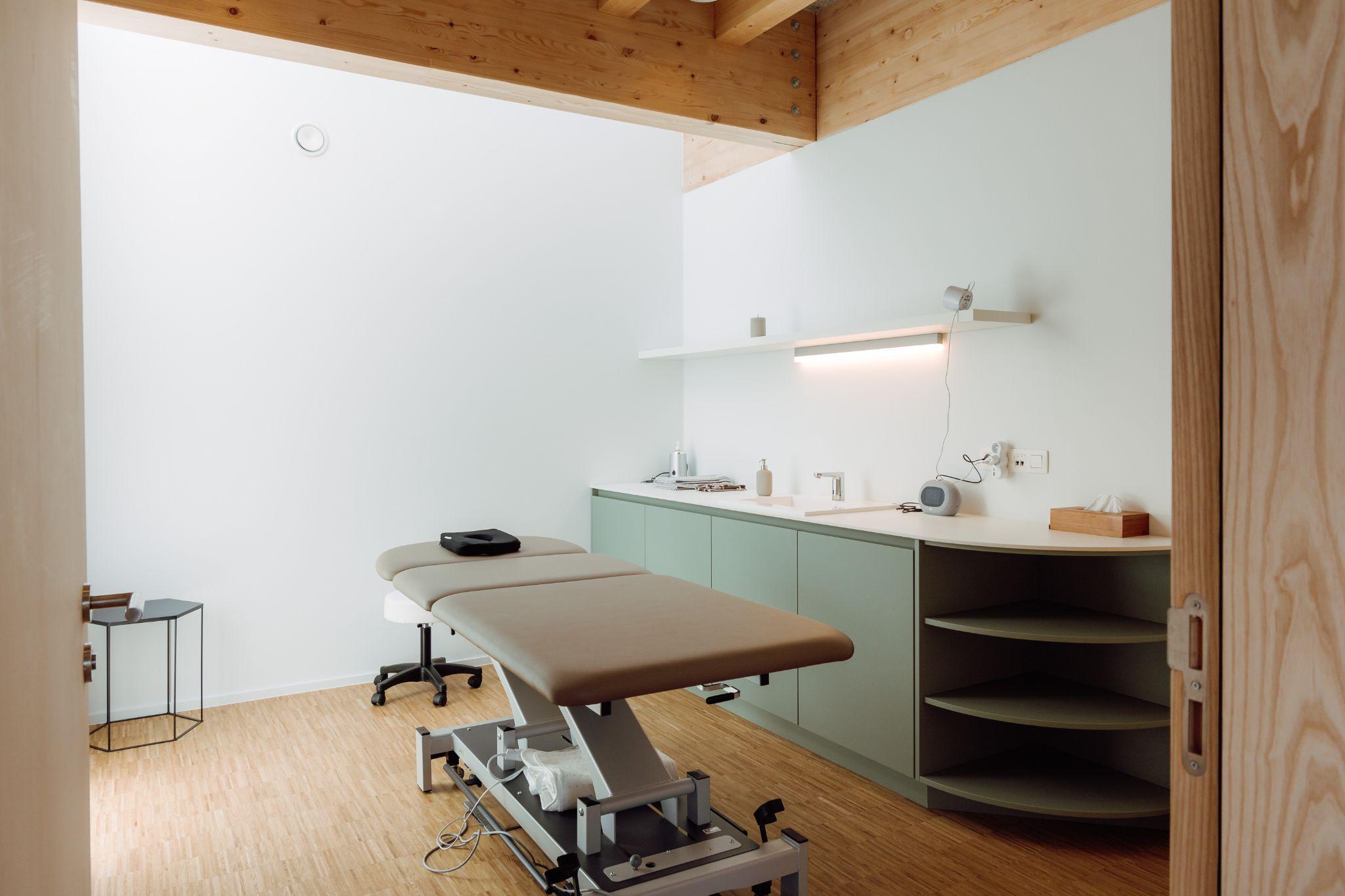
Claudia : “The first house created in 2016 was a wonderful experience, but it presented severe limitations. It was a three-storey building, totally unsuitable for people with reduced mobility (PRM). Moreover, for people out of breath or tired by heavily gruelling treatments, climbing several flights of stairs to access massage or Snoezelen relaxation rooms became an ordeal. Acoustics also posed a problem: administrative offices adjoined the treatment rooms, and the sound of telephones disturbed moments of relaxation.
For the new house, we started with a blank page. We organised large brainstorming sessions bringing together oncologists, nurses, volunteers, and patients to design the 'ideal Maison Mieux-Être'. The architectural firm Goffart & Polomé did an extraordinary job by immersing themselves in our deep needs.”
Telemis: You actually have a singular anecdote regarding the selection of the architectural project.
Claudia : Absolutely! During the selection jury, we had four competing projects. We insisted on including a volunteer and a patient on the jury. One of the projects was visually magnificent: a sort of 'hobbit house', very rounded, semi-buried in the park with large bay windows and abundant vegetation. Aesthetically, most of us were charmed.
That's when the patient present on the jury spoke up and said: « Oh no, you can't choose that! I would feel like I was being buried before my time, as if I were already dead if I had to enter that! »
It was a lightbulb moment. This proves how essential the presence of those first concerned is in such a process. We needed a place resolutely turned towards light and life.
Telemis: What are the concrete characteristics of this architecture designed for well-being?
Claudia : “The building incorporates fundamental symbolic and ergonomic elements:
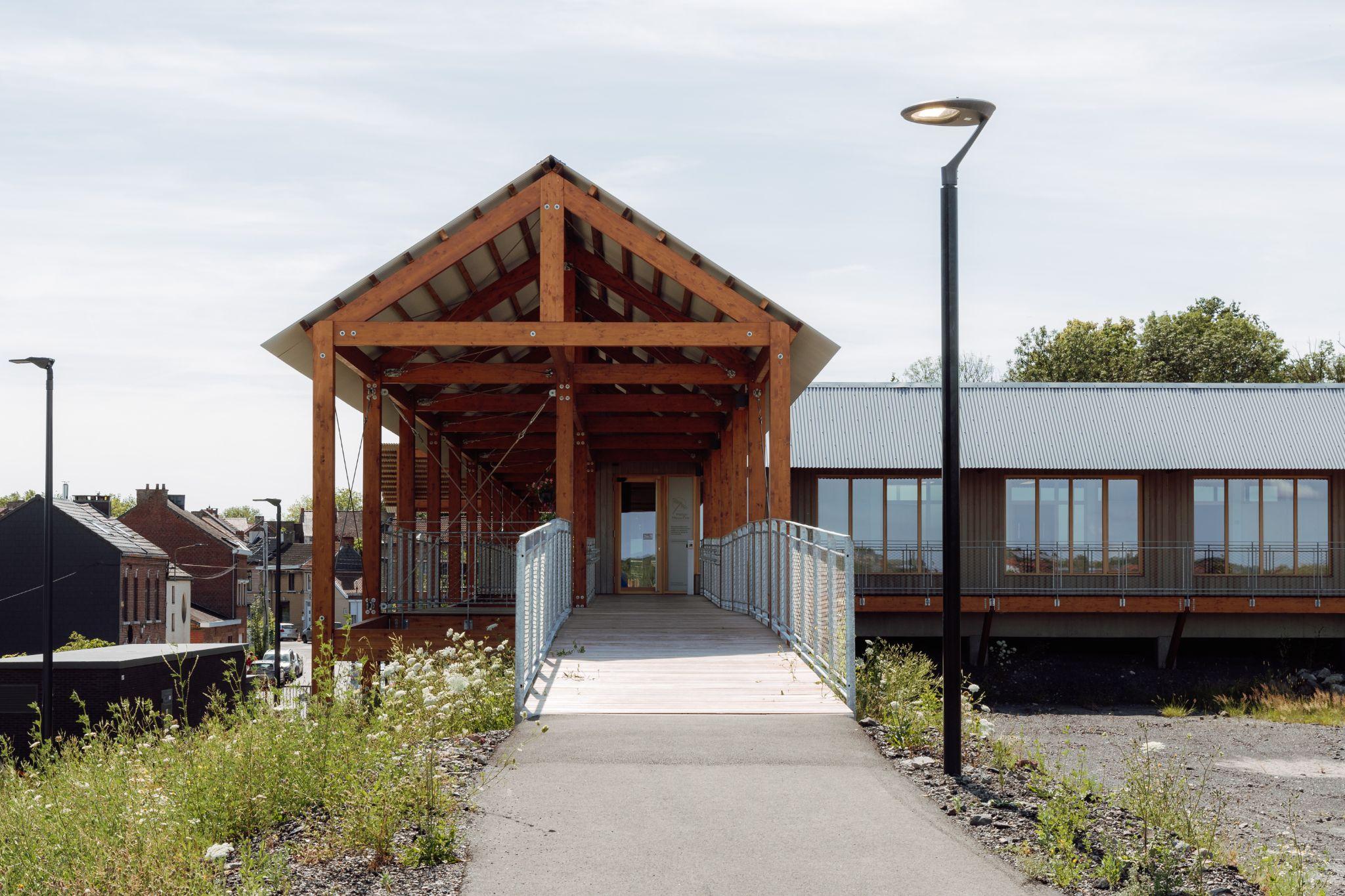
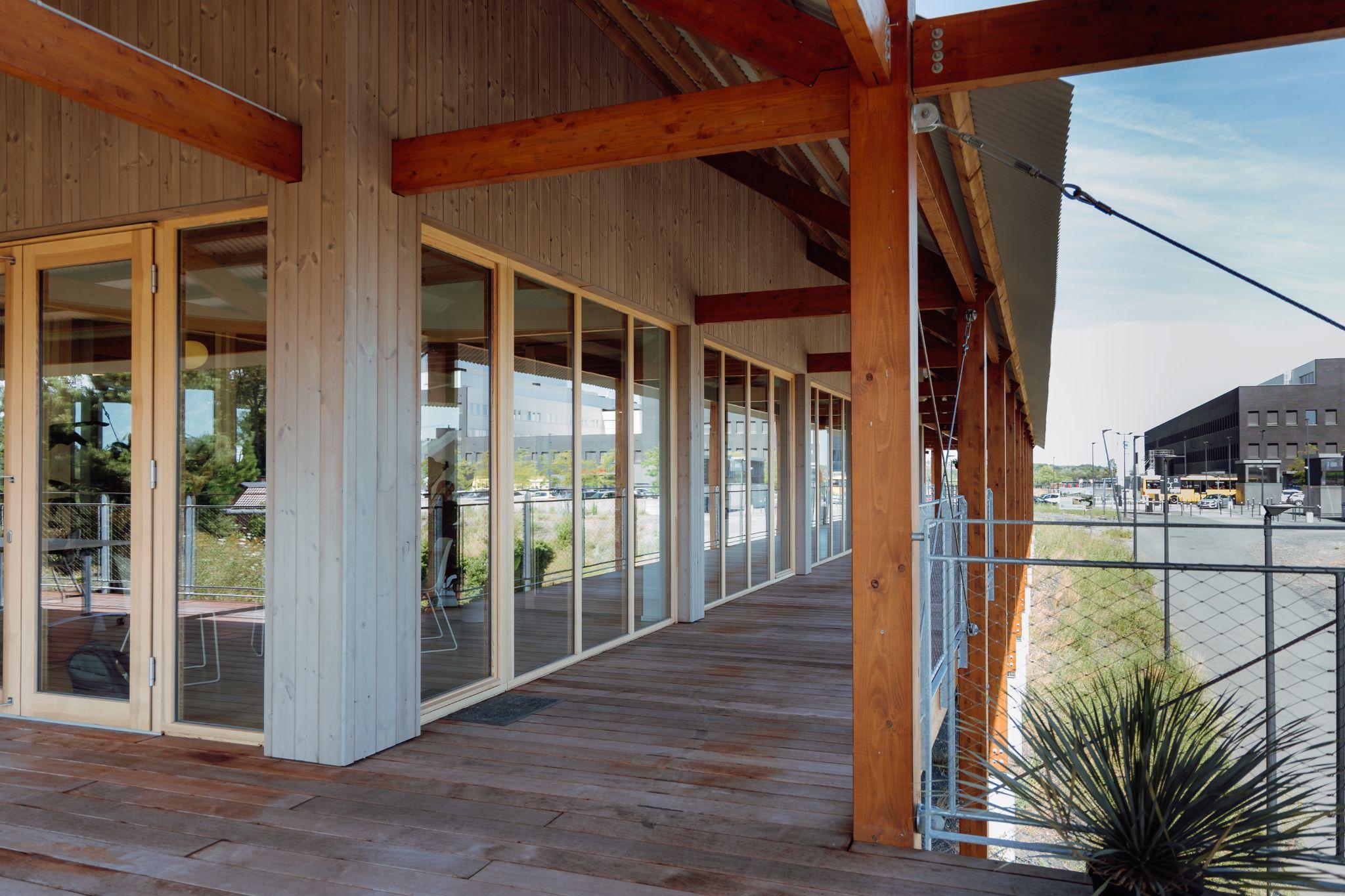
- The transition footbridge: The passage between the hospital and the house is made via a dedicated footbridge. It marks a physical and mental rupture, allowing the patient to leave behind the clinical smells, noise, and stress of the hospital environment.
- The automatic door: Unlike the heavy wooden door of the old house, we installed an automatic door. Many patients confide in us that the most difficult thing is to perform the physical gesture of 'pushing the door' to ask for help. Here, the door opens by itself to welcome the visitor without them having to exert any effort.
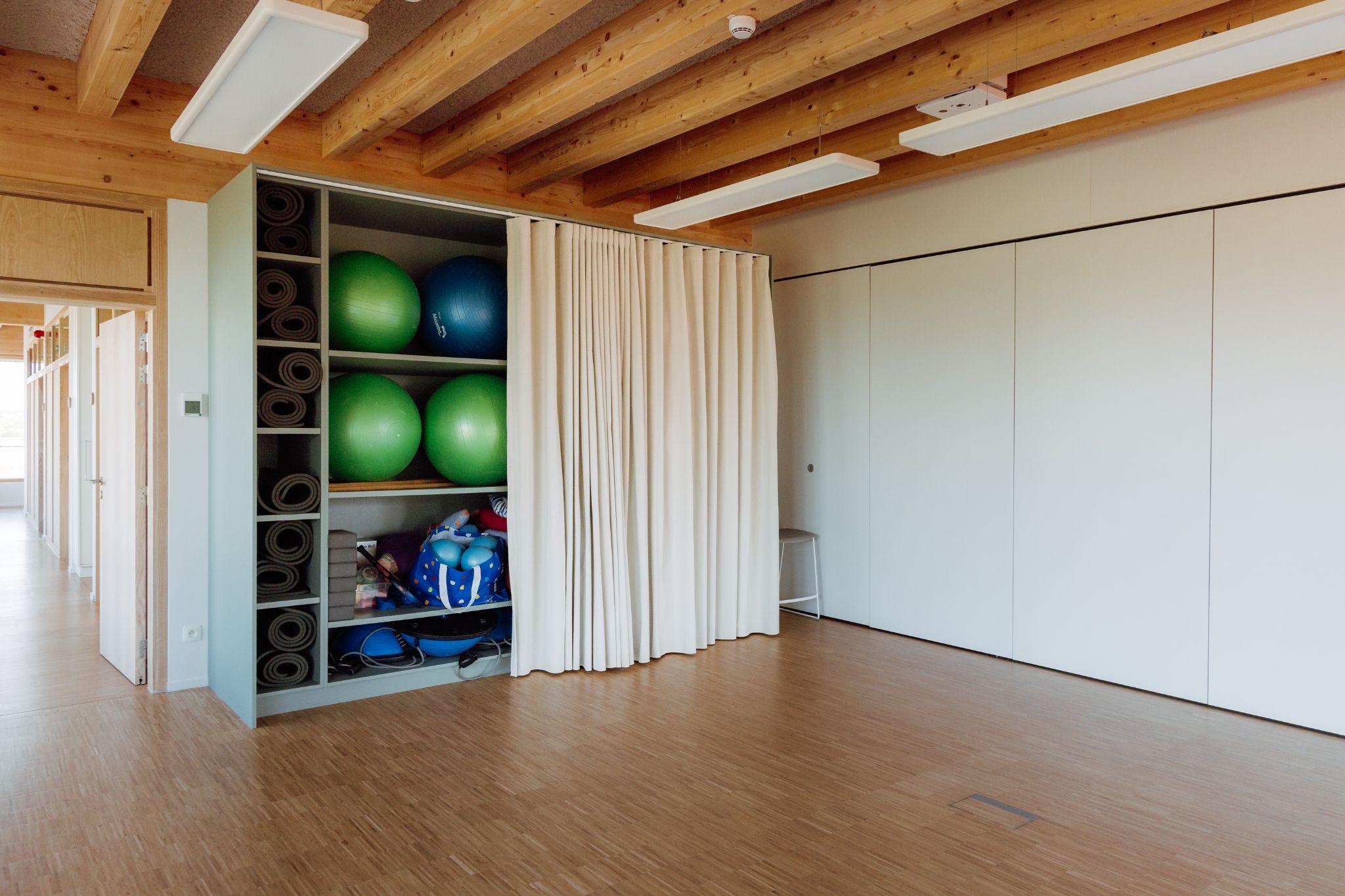
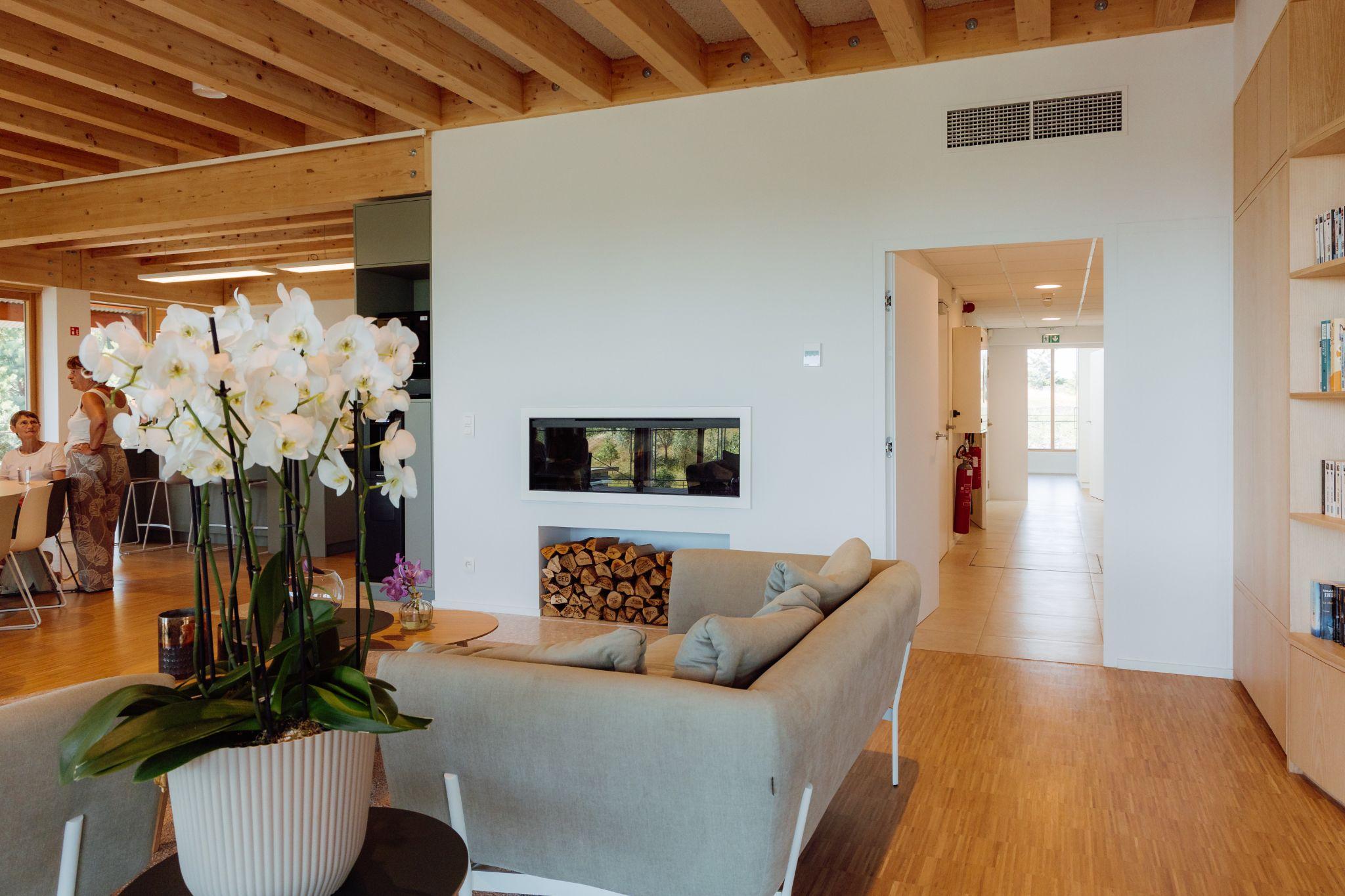
- Double circulation: Reactions to the disease are very diverse. Some people feel the need to confide, while others prefer absolute discretion. From the entrance, a corridor on the right leads directly to individual treatment and massage rooms, allowing one to receive treatment without crossing anyone. Conversely, by continuing straight on, one accesses a large open lounge and a vast kitchen with a central island promoting sharing, discussion, and conviviality.”l
4. Solidarity, patronage, and volunteer engagement
Telemis: The Maison Mieux-Être does not generate any profit. How do you manage to ensure its daily operation?
Claudia : “Our model rests on two inseparable pillars: the financial generosity of our partners and the wonderful commitment of our volunteers.
Today, we are lucky to be able to count on 57 active volunteers. They welcome patients, give tours of the premises, prepare cups of tea, or facilitate workshops. Without their energy, kindness, and precious time, the house simply could not function.
On the financial level, the support of private companies like Telemis is capital. Telemis involves itself by our side to give us the means to offer high-quality care to patients. We also receive donations from individuals via our website, corporate initiatives (such as solidarity pancake sales), testamentary legacies, or donations collected during funerals instead of flowers and wreaths.”
Action | Details |
|---|---|
Become a volunteer | Support, welcoming, or workshop facilitation. |
Make a donation | One-time or regular via the "Support us" tab. |
Corporate actions | Organization of internal solidarity events. |
Legacies and patronage | Transferring or directly funding our projects. |
5. Future ambitions and societal impact
Telemis: What are your objectives in the medium and long term for the development of the structure?
Claudia : “We wish to reach a much larger proportion of people affected by cancer. Currently, we accompany about 10% of the 2,104 patients diagnosed each year at the GHdC (i.e., about 210 people). For comparison, British Maggie's Centres reach nearly 40% of patients in partner hospitals.
The dynamic is extremely encouraging: from the first month of inauguration in April, we registered 30 new patients and 20 additional caregivers. If footfall were to double or triple, we have anticipated the demand: the architectural structure was dimensioned to be able to receive the construction of an additional floor without interrupting our activities sustainably.”
Telemis: What message would you like to pass on to public authorities and the world of health?
Claudia : “We keenly hope for an increased awareness among public authorities and social security regarding the fundamental medico-social utility of resourcing houses. The equation is of implacable logic: supporting the morale of patients, encouraging them to exercise, and improving their lifestyle reduces the recurrence rate, promotes adherence to oncology treatments, and eventually decreases overall health costs. Investing in the well-being and respite of patients is a major benefit for the whole of society. While awaiting full institutional recognition, we continue our mission thanks to the heart of our volunteers and the loyalty of our partners.”
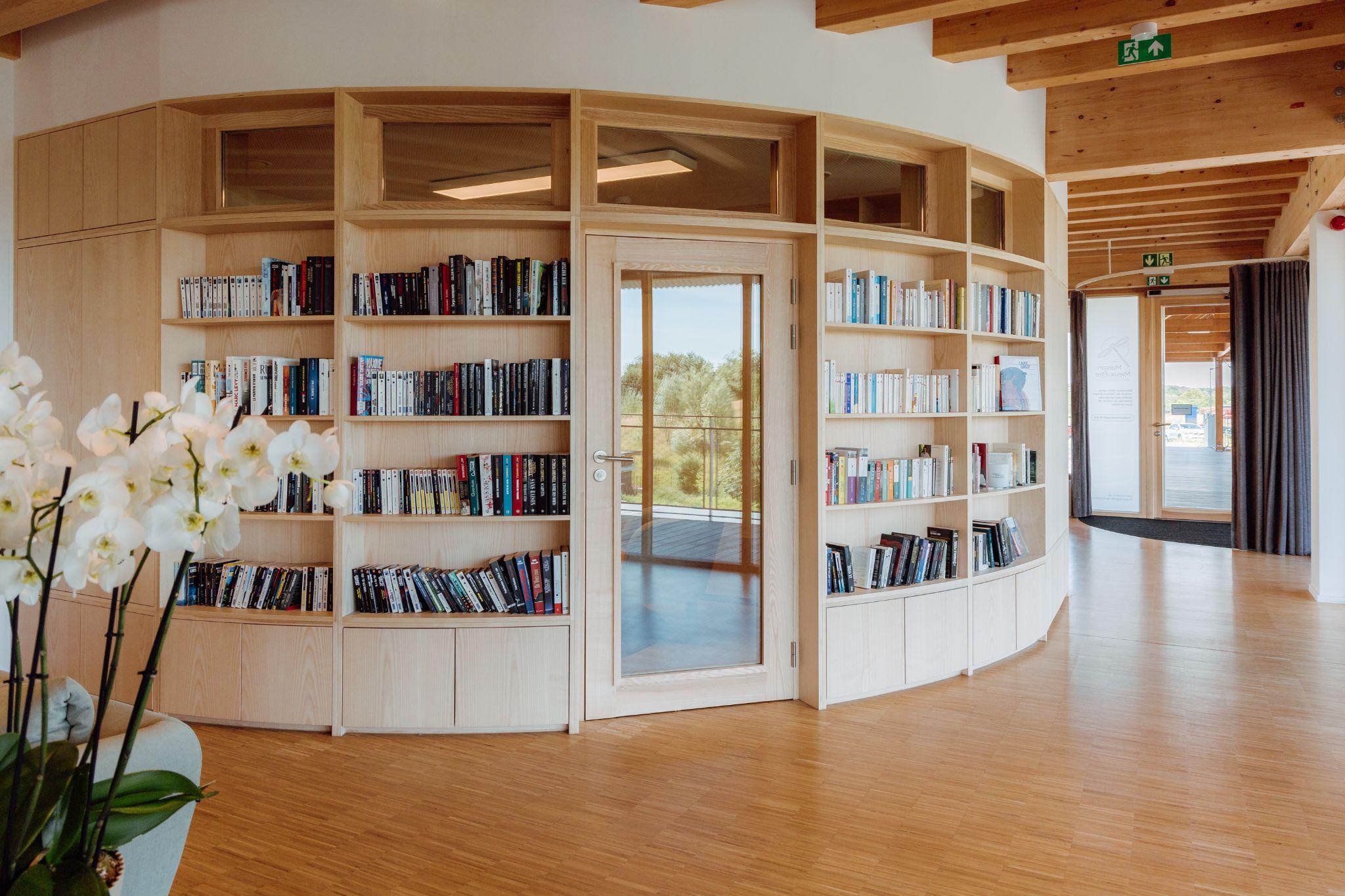
In conclusion, the Maison Mieux-Être is much more than a building: it is an ecosystem of solidarity where medical care meets humanity. Its sustainability rests on a precious balance between the commitment of volunteers and the generosity of its partners. The trust forged with actors like Telemis illustrates this common will: beyond financial support, it is a presence on the ground and a shared commitment that allow putting the human first. This project demonstrates with force that, when kindness unites with common values, the care pathway is transformed. More than just a place of care, it is an essential space of support that takes on its full meaning when medicine reaches its limits, offering patients and their loved ones a precious presence and support in all circumstances.
To contact the Maison Mieux Être :
https://www.ghdc.be/maison-mieux-etre
060/11.83.93
2, rue du Campus des Viviers
6060 Gilly